
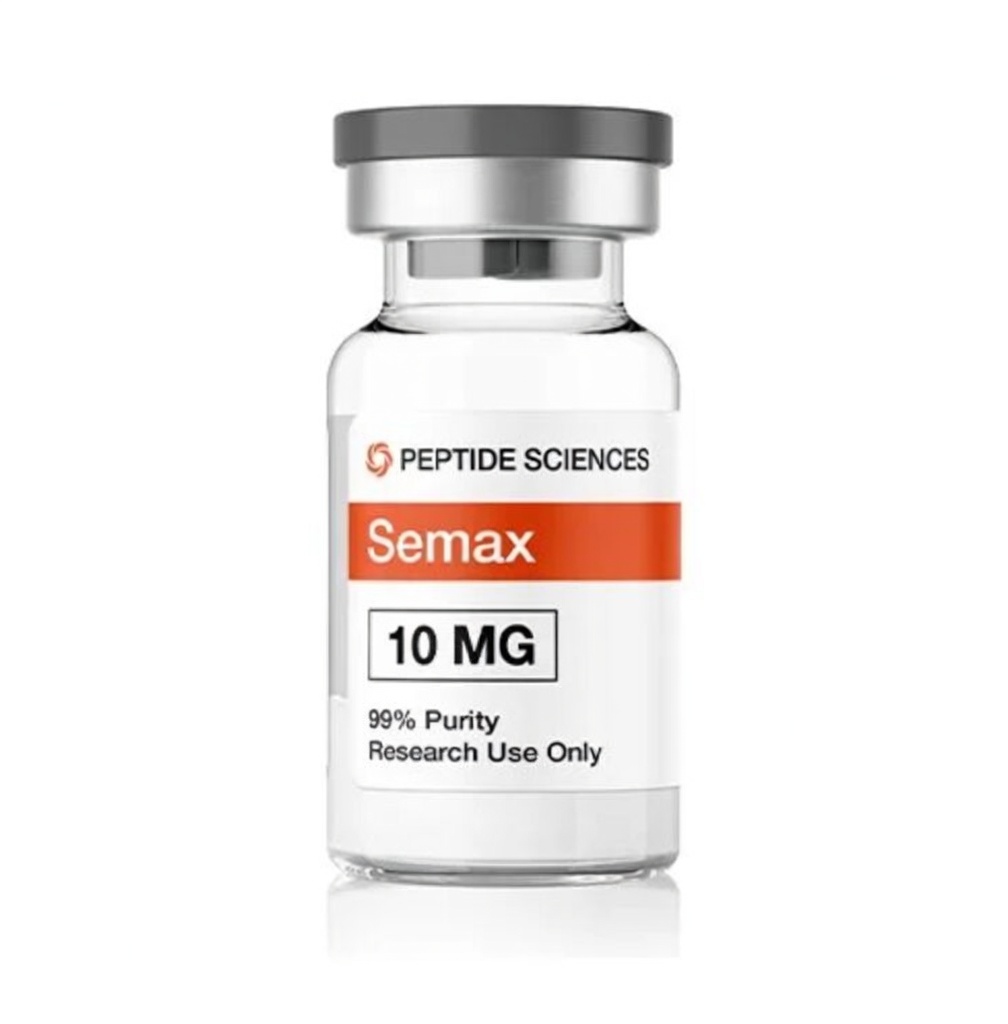
Semax is a synthetic neuropeptide that has attracted attention in scientific and research communities for its potential role in supporting cognitive and neurological studies. Originally developed in Eastern Europe, it has been investigated in controlled laboratory settings for its interaction with brain signaling pathways, particularly those related to attention, memory processing, and adaptive stress responses.
In research environments, Semax is often discussed as part of broader studies focused on neuroplasticity and the way the brain responds to environmental and biochemical stimuli. Scientists examine how small peptide chains like Semax may influence signaling molecules in the central nervous system, offering insight into complex brain functions. While findings vary across studies, interest in Semax continues due to its unique structure and its distinct profile compared to traditional nootropic compounds.
From a product perspective, Semax is typically supplied as a lyophilized powder or solution intended strictly for laboratory and research use. It is not approved for general medical treatment in many regions, and its applications remain within the scope of experimental and investigational contexts. Researchers value consistency in purity, stability, and formulation accuracy when working with compounds like Semax, as these factors are critical for reliable study outcomes.
One of the reasons Semax has gained attention in scientific discussions is its peptide-based structure, which allows it to interact with biological systems in a highly specific way. Unlike many small-molecule compounds, peptides often demonstrate targeted activity, making them useful tools for studying receptor pathways and neurochemical balance. In experimental settings, Semax is frequently evaluated alongside other neuroactive peptides to better understand comparative effects and mechanisms of action.
Beyond its biochemical interest, Semax is also studied for its potential relationship with stress adaptation pathways. Researchers explore how certain peptides may influence the body’s response to environmental challenges, including oxidative stress and fatigue-related markers in laboratory models. These investigations contribute to a broader understanding of how the nervous system maintains balance under varying conditions.
Quality control plays an important role in the handling and distribution of Semax for research purposes. Laboratories typically prioritize high-purity synthesis methods, sterile processing, and careful packaging to ensure that the compound remains stable during storage and transport. These standards help maintain the integrity of experimental results and reduce variability across different research applications.
It is also common for Semax to be included in comparative studies that evaluate cognitive-related peptides. Such studies aim to map differences in molecular behavior, receptor interaction, and downstream effects within neural systems. While these investigations are still evolving, they contribute valuable data to the growing field of neuropeptide research.
Because of its investigational nature, it is generally labeled clearly for research use only. This ensures that it is handled within appropriate regulatory frameworks and used by qualified professionals in controlled environments. Researchers are encouraged to follow all applicable guidelines and ethical standards when working with experimental compounds.
In summary, it remains a compound of scientific interest due to its unique peptide structure and its role in ongoing neurological research. Its potential applications are still being explored, and current understanding is based primarily on preclinical and experimental studies. As research continues, Semax may further contribute to the broader study of brain function, cognitive mechanisms, and peptide-based signaling systems.
Reviews
There are no reviews yet.