
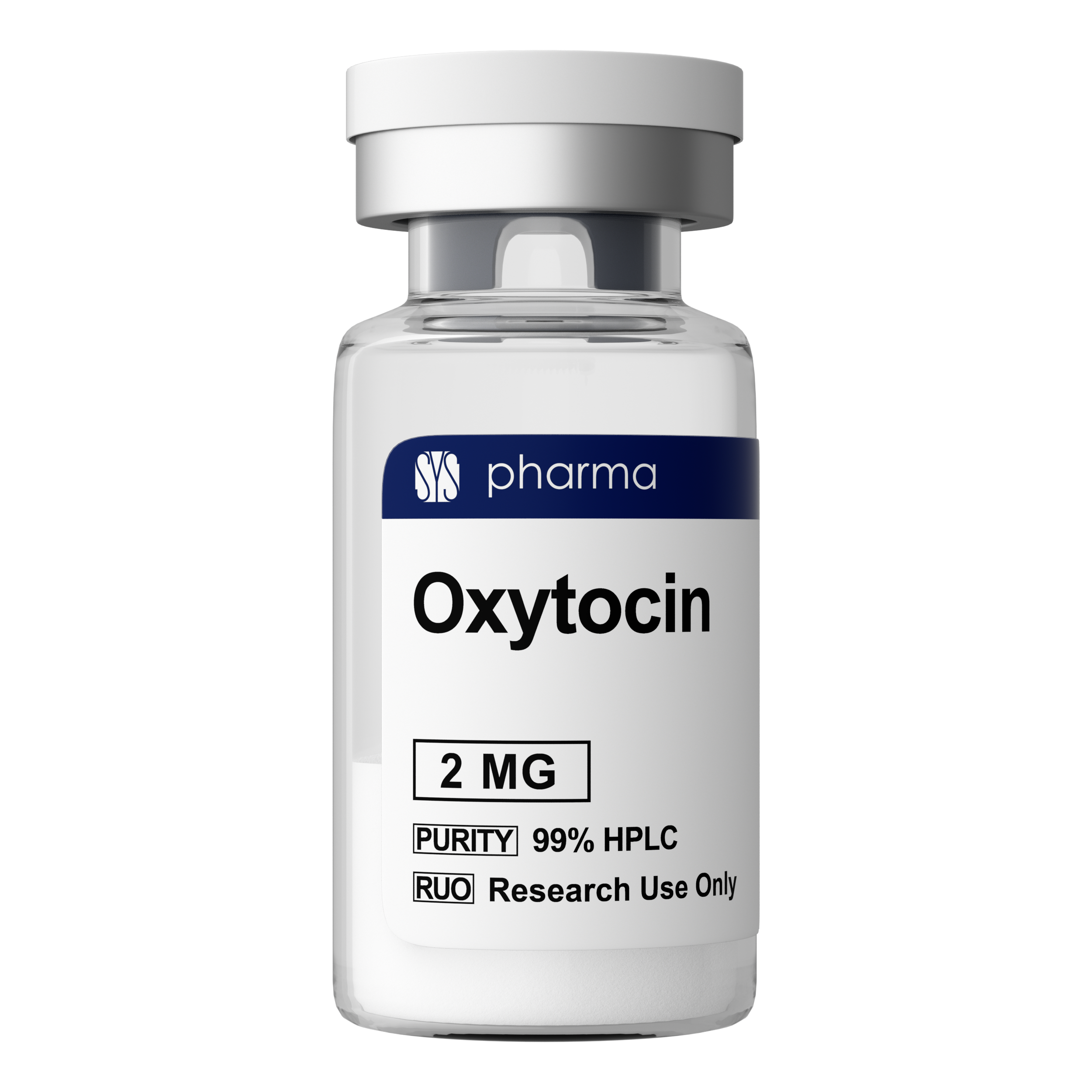
Oxytocin is a naturally occurring peptide hormone and neurochemical that plays an essential role in human biology, particularly in social bonding, emotional connection, and physiological regulation. Often referred to in scientific literature as a “bonding molecule,” it is produced in the hypothalamus and released by the pituitary gland, influencing both the brain and body in subtle but meaningful ways.
In a broader wellness and research context, oxytocin has gained attention for its involvement in interpersonal behavior, stress response, and emotional well-being. It is closely associated with feelings of trust, attachment, and calmness, especially in social or emotionally significant situations. While its primary functions are biological, its impact on human behavior has made it a subject of growing interest in neuroscience and psychology.
Oxytocin is structured as a small peptide, meaning it is composed of amino acids that act as signaling molecules in the body. Its role extends beyond emotional regulation, contributing to key physiological processes such as uterine contractions during childbirth and milk ejection during lactation. Because of these important functions, it is widely studied in both clinical and academic settings.
From a product and research standpoint, oxytocin is valued for its stability in controlled environments and its relevance in experimental studies related to human behavior, stress modulation, and endocrine system function. Researchers often examine its interaction with receptors in the brain to better understand how social bonding and emotional responses are biologically regulated.
One of the most interesting aspects of oxytocin is how it interacts with the nervous system. It does not simply act as a “feel-good” chemical; instead, it helps regulate complex communication pathways between the brain and body. This includes influencing how individuals perceive social cues, respond to emotional stimuli, and form attachments. These effects are subtle and context-dependent, which makes oxytocin a fascinating subject of ongoing scientific exploration.
In laboratory and controlled research environments, oxytocin is typically handled with care due to its sensitivity and biological activity. It is important that any use, whether for study or reference, follows proper scientific guidelines and ethical standards. Its role in human physiology means it must be treated as a biologically active compound rather than a general supplement or over-the-counter product.
Beyond its scientific importance, oxytocin has also entered public discussion due to its association with human connection and emotional health. It is often mentioned in the context of relationships, parenting, and social interaction, reflecting its influence on bonding behaviors. However, its effects are not simplistic or universal, and they vary depending on individual biology and environmental factors.
In summary, oxytocin is a powerful and multifunctional hormone that bridges the gap between physiology and behavior. Its significance spans from reproductive health to emotional regulation, making it one of the most widely studied peptides in modern science. Whether viewed from a medical, psychological, or biochemical perspective, it remains a key molecule in understanding how humans connect, respond, and interact with the world around them.
Reviews
There are no reviews yet.