
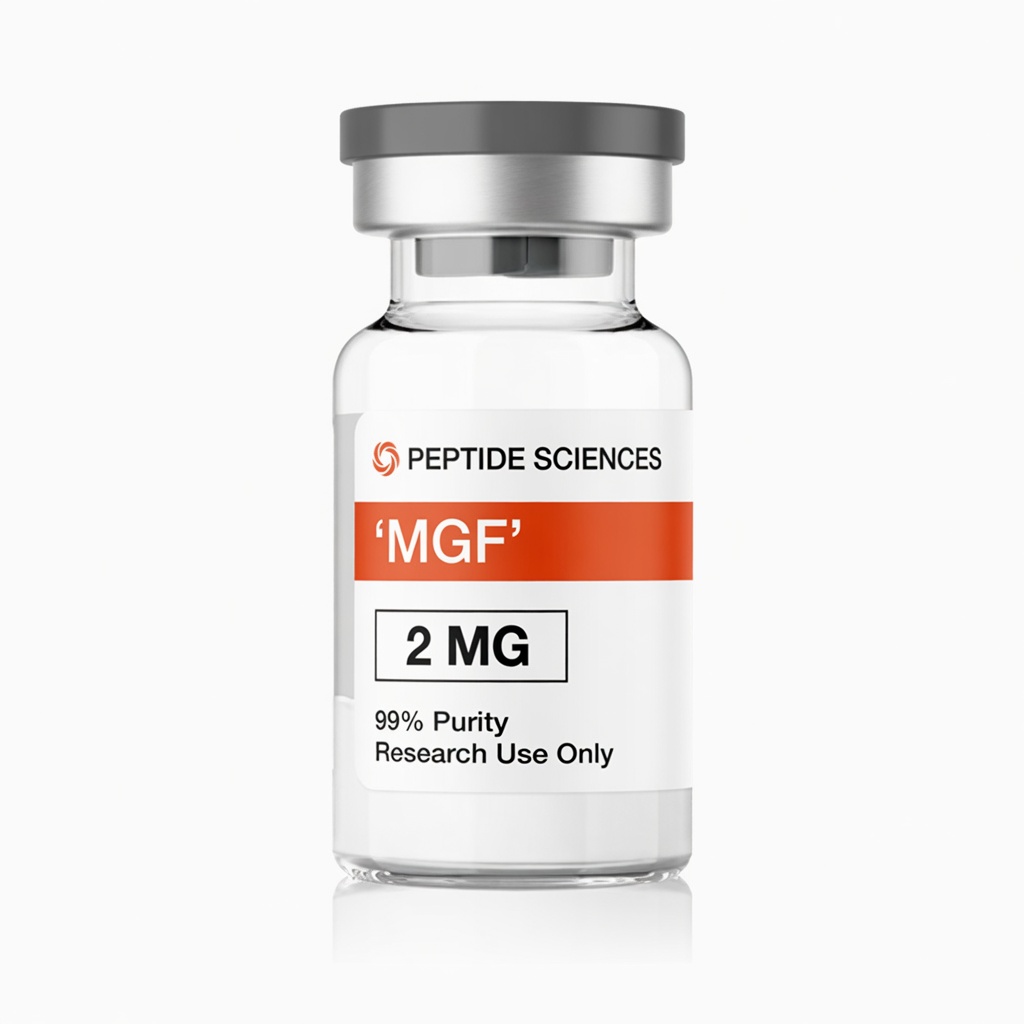
MGF, also known as Mechano Growth Factor, is a specialized peptide associated with muscle recovery, tissue support, and physical performance research. It is a naturally occurring variation of IGF-1 that is produced in muscle tissue after intense physical activity or stress. Because of its role in cellular repair and regeneration, MGF has gained attention among researchers studying recovery processes, muscle adaptation, and overall performance support.
This peptide is frequently explored in laboratory settings focused on muscle response following resistance training, physical strain, or injury-related stress. Researchers continue to investigate how MGF interacts with muscle cells and how it may influence repair mechanisms within the body. Its unique structure and localized activity make it an interesting compound for studies involving muscle development and recovery efficiency.
Many researchers are interested in the potential relationship between MGF and muscle tissue regeneration. During physical exertion, muscle fibers experience stress that can lead to microscopic damage. The body naturally responds by initiating repair processes, and MGF is believed to play a role in signaling these regenerative responses. Because of this, it is commonly discussed in scientific communities focused on recovery and muscle adaptation research.
In addition to muscle-related studies, MGF has also attracted attention for research involving cellular growth, tissue maintenance, and recovery support. Some laboratory investigations explore how peptides like this may contribute to maintaining lean tissue quality and assisting natural repair functions after periods of intense activity. Ongoing studies continue to evaluate its broader biological effects and mechanisms.
Researchers often value compounds that demonstrate targeted activity within muscle tissue, and MGF has become recognized for that reason. Unlike more generalized growth factors, this peptide is frequently associated with localized responses triggered by mechanical stress. This makes it a unique subject for investigations related to training recovery, muscle preservation, and physical conditioning support.
MGF is typically handled in controlled laboratory environments and intended strictly for research purposes. Proper storage and handling procedures are important to maintain peptide stability and integrity during research applications. Maintaining quality standards and laboratory testing procedures helps ensure consistency for research use.
Interest in recovery-focused peptides has continued to grow as scientists and performance researchers seek better understanding of how the body responds to stress and repair cycles. MGF remains one of the more discussed compounds in these conversations because of its connection to muscle adaptation and tissue response following physical exertion.
For individuals researching advanced peptide compounds, MGF represents a peptide frequently associated with recovery science, muscle regeneration studies, and tissue-support investigations. Its growing presence within peptide research communities reflects ongoing interest in compounds connected to repair pathways and performance-related recovery models.
As scientific research continues to evolve, MGF remains an important peptide in studies focused on recovery dynamics and muscle-related biological responses. Researchers continue exploring its role in tissue repair signaling and the broader processes involved in maintaining physical performance and muscle integrity over time.
This research compound is intended for laboratory and scientific research purposes only and is not approved for human consumption, medical use, or diagnostic applications.
Reviews
There are no reviews yet.