
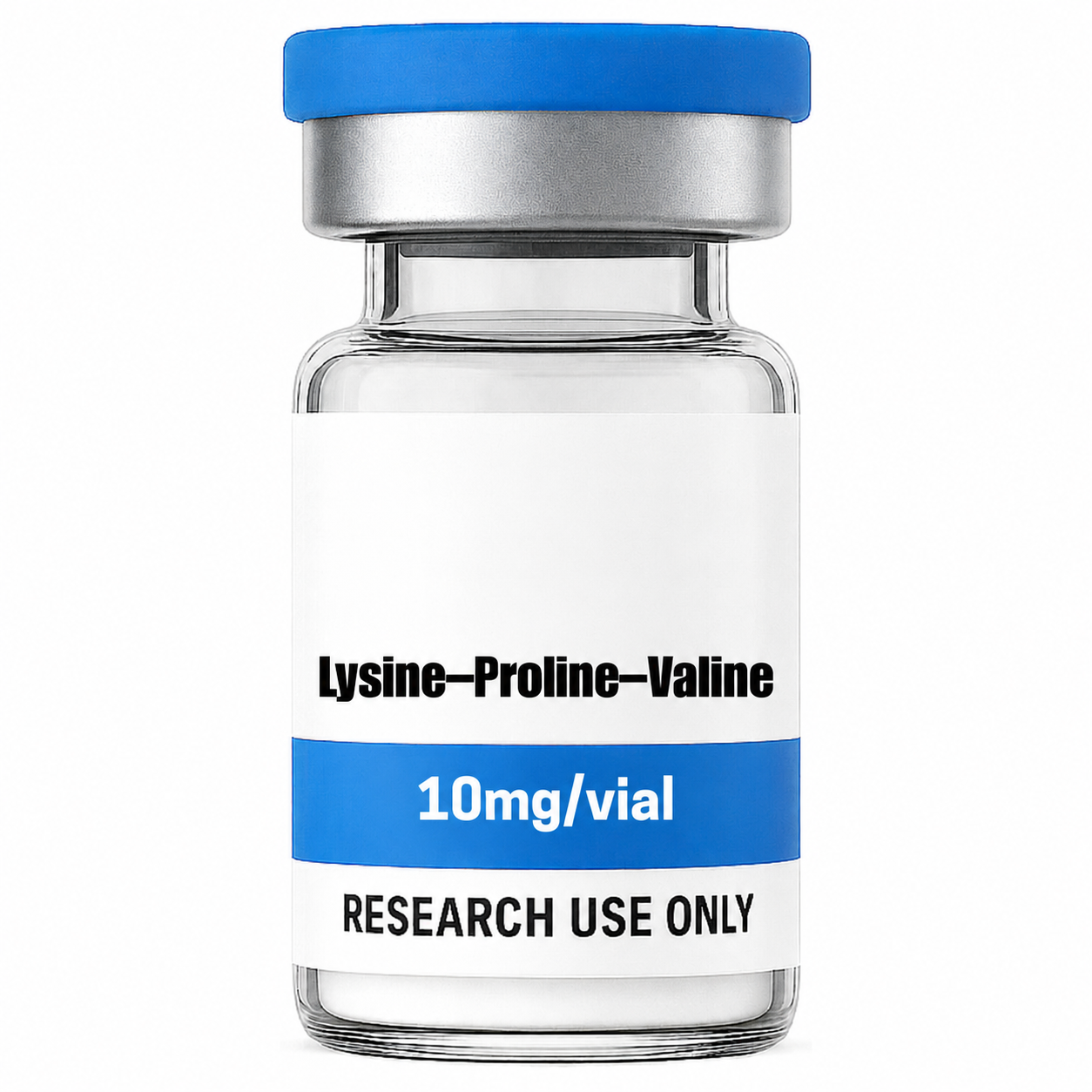
LYSINE-PROLINE-VALINE is a carefully designed tripeptide-style compound built from three naturally occurring amino acids that play essential roles in the body’s structural and functional balance. Each component LYSINE-PROLINE-VALINE brings its own unique biological characteristics, and when combined, they form a focused sequence often associated with stability, repair processes, and protein interaction pathways.
LYSINE-PROLINE-VALINE is commonly discussed in advanced biochemical and research environments due to its simple yet highly intentional structure. Instead of relying on complex synthetic frameworks, it is built from foundational amino acids that are already present in human biology, making it an interesting reference point for studies involving peptide signaling and structural support behavior.
A Simple Structure with Purpose
The strength of LYSINE-PROLINE-VALINE lies in its simplicity. Lysine is a positively charged amino acid that is frequently involved in protein binding and structural formation. Proline contributes rigidity to molecular structures, often influencing how LYSINE-PROLINE-VALINE fold and stabilize. Valine, a branched-chain amino acid, is known for its role in energy pathways and tissue-related processes.
When arranged in sequence, these three amino acids create a compact and stable motif that is often explored in relation to collagen-related activity, connective tissue modeling, and cellular signaling studies. While it is not a pharmaceutical product, its structure makes it a frequent subject of biochemical interest.
Research-Oriented Applications
LYSINE-PROLINE-VALINE is primarily used in laboratory and research settings where amino acid interactions and peptide behavior are being evaluated. It is commonly included in studies focused on protein expression, molecular stability, and peptide chain responsiveness under controlled environments.
Researchers are particularly drawn to combinations like this because they provide insight into how small sequences of amino acids can influence larger biological systems. Even subtle changes in sequence can affect how peptides interact with receptors, enzymes, and structural proteins.
Naturally Inspired Composition
One of the key advantages of this tripeptide concept is that it is derived from naturally occurring biological building blocks. Lysine, proline, and valine are all found in everyday dietary protein sources, meaning the foundation of this compound is closely aligned with natural human nutrition pathways.
This makes it especially relevant in discussions around bio-compatibility and structural protein formation. Rather than introducing unfamiliar synthetic structures, it reflects patterns that already exist in the body’s own protein architecture.
Quality and Handling Considerations
In controlled environments, compounds like LYSINE–PROLINE–VALINE are typically handled with careful attention to purity and stability. Proper storage conditions, including temperature control and protection from moisture, are important to maintain structural integrity over time.
Because it is often used in research contexts, consistency between batches and verified composition are critical factors. Reliable sourcing ensures that experimental outcomes remain accurate and reproducible.
Why It Draws Scientific Interest
The combination of LYSINE-PROLINE-VALINE continues to attract attention due to its balanced and functional nature. Each amino acid contributes a different structural property, making the sequence useful for exploring how peptides influence biological systems at a molecular level.
Rather than being a complex engineered molecule, it represents a minimalist approach to peptide design—one that focuses on clarity, simplicity, and biological familiarity. This makes it a useful reference point in both academic and applied research environments.
Final Overview
LYSINE–PROLINE–VALINE is best understood as a structurally meaningful amino acid sequence used in research-focused settings. Its value lies in its simplicity and its direct connection to naturally occurring biological components. By combining three essential amino acids into a defined sequence, it offers a useful model for studying peptide behavior, protein interaction, and structural stability.
Whether examined in biochemical studies or used as part of broader molecular research, this tripeptide continues to be a relevant and widely referenced composition in the field of amino acid science.
Reviews
There are no reviews yet.