
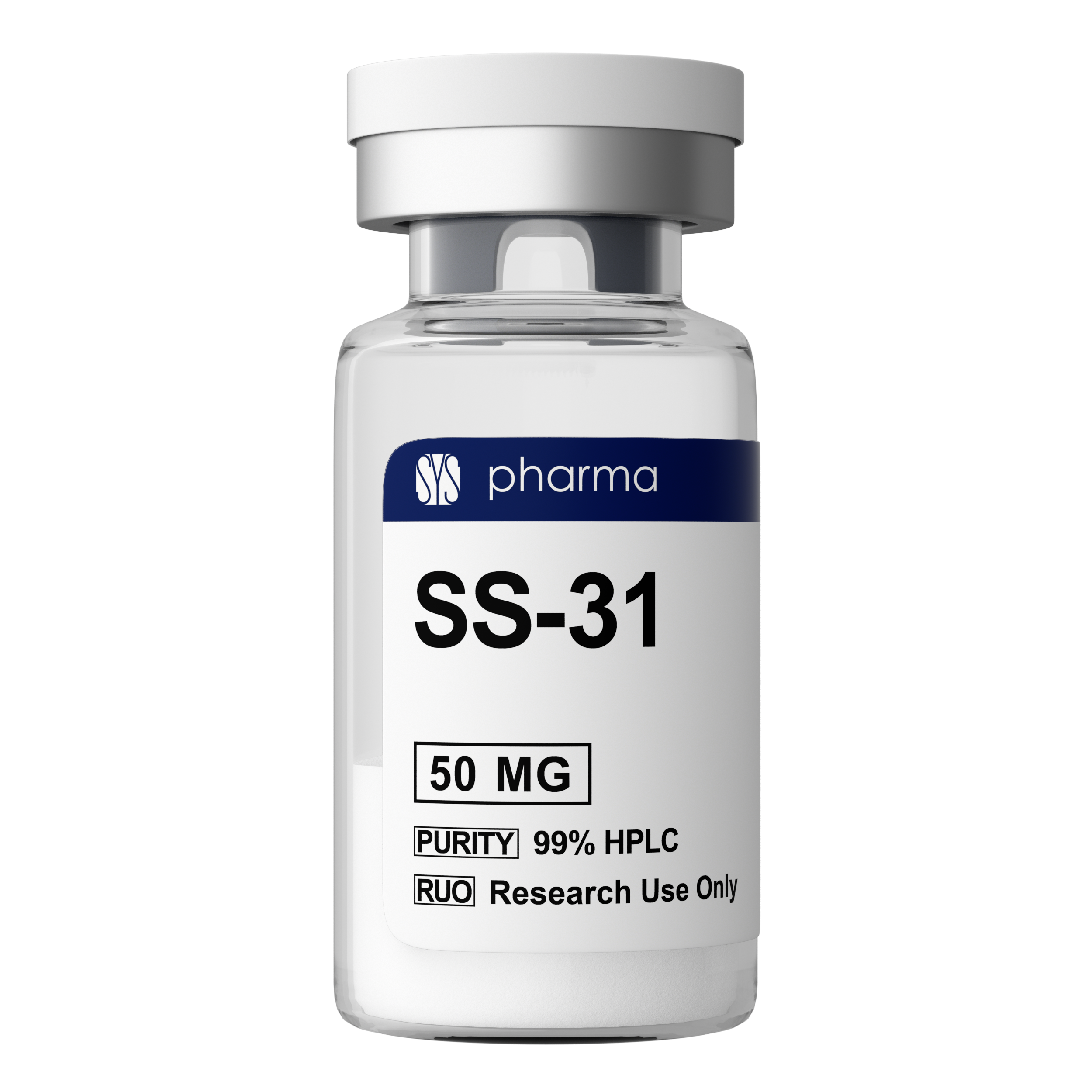
SS-31 is a short, synthetic peptide often discussed in advanced cellular research for its relationship with mitochondrial function and cellular resilience. It has gained attention in scientific and wellness-oriented circles because of its unique structure and its ability to interact with the inner mitochondrial membrane, where energy production takes place. While still primarily a subject of ongoing research, SS-31 is frequently highlighted for its role in supporting cellular efficiency at the most fundamental level.
At its core, SS-31 is designed to target mitochondria—the “powerhouses” of cells. These organelles are responsible for producing ATP, the energy currency that powers almost every biological process in the body. Over time, mitochondrial efficiency can decline due to environmental stressors, aging, or metabolic strain. This is where SS-31 is often studied, as it appears to interact with cardiolipin, a key phospholipid in the inner mitochondrial membrane that helps maintain structural integrity and optimal energy flow.
What makes SS-31 particularly interesting is its selectivity. Instead of acting broadly throughout the body, it is believed to accumulate in mitochondria where it may help stabilize membrane function and reduce oxidative stress at the cellular level. Oxidative stress occurs when there is an imbalance between free radicals and the body’s ability to neutralize them. This imbalance is widely studied in relation to fatigue, aging, and overall cellular wear and tear. By supporting a more balanced internal environment within the mitochondria, SS-31 is often explored as a compound of interest in longevity and energy-related research.
Researchers have also examined SS-31 for its potential role in maintaining cellular performance under stress conditions. This includes scenarios where cells are exposed to high metabolic demand or reduced oxygen efficiency. In such environments, mitochondrial support becomes especially important, as energy production must remain stable to sustain normal function. SS-31’s ability to bind selectively to mitochondrial structures has made it a valuable subject in studies focused on resilience and recovery at the cellular level.
Beyond its scientific profile, SS-31 is often discussed in a broader wellness context. Many people are drawn to it because of the growing interest in mitochondrial health as a foundation for overall vitality. Energy levels, cognitive clarity, and physical endurance are all deeply connected to how well mitochondria function. As a result, compounds like SS-31 have become part of a wider conversation about supporting the body from the inside out, rather than focusing only on surface-level symptoms.
It is important to note that SS-31 is still primarily used in research settings. Its applications are being studied in various models, including those related to cardiovascular function, muscle efficiency, and age-related cellular decline. However, definitive conclusions in humans are still under investigation, and its full potential has yet to be established through large-scale clinical use.
From perspective, it is frequently searched in relation to mitochondrial peptides, cellular energy support, and anti-aging research. This makes it a highly relevant topic in the biotechnology and wellness research niche. Content surrounding SS-31 should remain balanced, focusing on its scientific background while avoiding exaggerated claims.
In summary, it is a promising research peptide that continues to attract attention for its targeted action on mitochondria. Its connection to cellular energy production and oxidative balance makes it a compelling subject in modern biochemical studies. As research evolves, SS-31 may further clarify its role in understanding how cellular health influences overall well-being.
Reviews
There are no reviews yet.