
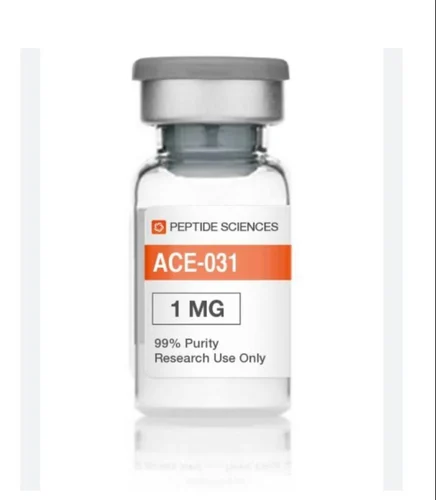
ACE-031 is a cutting-edge research compound that has gained attention in the fields of muscle biology and performance science for its unique interaction with growth regulation pathways in the body. Unlike traditional supplements that focus on basic nutrition or hormonal support, this compound is studied for its potential role in influencing how muscle tissue develops, repairs, and responds to physical stress.
At its core, ACE-031 is associated with the inhibition of myostatin activity, a naturally occurring protein in the body that helps regulate muscle growth. In simple terms, myostatin acts as a “brake” on muscle development, preventing excessive growth. By interacting with this pathway, ACE-031 has been explored in scientific settings for its ability to support increased muscle formation and enhanced recovery responses following intense physical activity. While research is still ongoing, the interest around this compound continues to grow due to its promising biological profile.
One of the reasons ACE-031 attracts attention is its relevance to muscle-wasting conditions and regenerative science. Researchers have investigated how modifying the myostatin pathway could benefit situations where muscle loss is a concern, such as aging-related sarcopenia or certain muscular disorders. Although these studies are primarily experimental, they highlight the broader potential of this compound in advancing our understanding of muscle maintenance and regeneration.
From a performance and fitness perspective, ACE-031 is often discussed in theoretical contexts related to muscle recovery, endurance adaptation, and lean tissue development. However, it is important to emphasize that this compound is not approved for human consumption or therapeutic use, and its effects in real-world applications have not been fully established. Most available information comes from preclinical research and controlled laboratory studies, rather than large-scale human trials.
What makes ACE-031 particularly interesting is its selective mechanism. Rather than broadly influencing hormones or metabolic pathways, it is studied for its targeted interaction with specific signaling proteins involved in muscle regulation. This level of precision is what makes it a subject of ongoing scientific curiosity, especially in regenerative medicine and biotechnology fields.
In laboratory environments, compounds like ACE-031 are typically handled under strict research conditions. Scientists use them to better understand how muscle tissue communicates at a cellular level, and how blocking or modifying certain signals may influence growth and repair outcomes. These insights may eventually contribute to future medical advancements, though such applications remain theoretical at this stage.
For individuals exploring advanced research compounds, ACE-031 is often referenced alongside other experimental peptides in discussions about muscle physiology and tissue regeneration. Its reputation is built more on scientific interest than practical use, which is why accurate information and responsible handling are essential when discussing it.
It is also worth noting that regulatory agencies in many regions have not approved ACE-031 for clinical or consumer use. This means its availability is typically restricted to research settings only, and it should not be marketed or used as a dietary supplement or performance enhancer.
In summary, ACE-031 represents an intriguing area of scientific exploration focused on muscle growth regulation and myostatin inhibition. While its potential has sparked significant curiosity, the compound remains firmly within the realm of experimental research. Ongoing studies will continue to determine whether its mechanisms can one day be safely and effectively applied in medical or therapeutic contexts.
As research progresses, ACE-031 may contribute valuable insights into how the human body builds and preserves muscle tissue, offering a deeper understanding of regeneration and physical adaptation. For now, it remains a compelling subject for scientific investigation rather than a mainstream health product.
Reviews
There are no reviews yet.